ACADEMIC SOURCES
Bushman, B. J., & Cantor, J. (2003). Media ratings for violence and sex: Implications for policymakers and parents. American Psychologist, 58(2), 130–141. https://doi.org/10.1037/0003-066X.58.2.130
This is a source that explores the impact that age ratings have on enticing younger audiences into viewing and indulging in movies, television programmes, music and video games. It goes into depth with the research they have done into the impact these age ratings have and if it has a big enough of an influence on attracting the younger viewers.
Whilst this is an in-depth look into this subject and has some detailed research, it’s argument doesn’t seem to be rounded off very well. They end with “is this too much to ask?” and in my opinion this makes their argument fall flat. After the effort they put into their research, they should be able to answer this question themselves.
Ron Leone & Kimberly L. Bissell (2005) Movie Ratings and Third-Person Perception, Atlantic Journal of Communication, 13:4, 272-291, https://doi.org/10.1207/s15456889ajc1304_4
This is a study of students and the third-person effects of learning, behaviour and more after they read a movie synopsis that contained different age ratings and a different amount of sexual content.
They tried to keep the study safe, that contained media that wasn’t harmful or in any way persuasive. Within their study, they hit some roadblocks: the limit of the population used for the research and the likelihood the group would be exposed to each item outside the study.
Whilst they discuss what they would do differently, if they did this study again, this shows you have to take the results of their research with a pinch of salt.
Joseph Price, Craig Palsson & Doug Gentile (2014) What Matters in Movie Ratings? Cross-country Differences in how Content Influences Mature Movie Ratings, Journal of Children and Media, 8:3, 240-252, https://doi.org/10.1080/17482798.2014.880359
This is a source that examines the impact different countries have on the content within movies and the age ratings the end up receiving.
They look into the data of over 1,000 movies and their ratings, which is a substantial amount of sources for their research. They found that the United States has more of a cut down on profanity but are less focused on cutting down on violence. They discovered the approach the USA take of how they give their movies age ratings is odd, due to the fact violence has the strongest impact and harm to children who view this content.
This is an interesting source and I am impressed with the in-depth look at the different takes each country has when it comes to movie ratings. In their conclusion, they mention that cultures have different opinions on what they find offensive but many countries need to improve when it comes to rating movies. As someone who watches many movies and questions why certain movies got the ratings they did and feeling they may deserve a higher rating, I couldn’t agree more.
Douglas A. Gentile, Julia A. Maier, Mary Rice Hasson and Beatriz Lopez de BonettiPediatrics July 2011, 128 (1) 36-44, https://doi.org/10.1542/peds.2010-3026
The studies within this source were done to find out how parents feel regarding media rating systems, how often they use them to determine if the children can watch the content, and what information they want to gain from these age ratings.
They discovered that parents don’t feel satisfied with current age ratings and that as parents they would prefer ratings to provide a better description of what appears in the content. However, they found that they agree on the ages that the range of content is appropriate for.
As a source that relies on research, I feel they got an end result that is useful for the topic they set out on.
Kira A. Varava & Brian L. Quick (2015) Adolescents and Movie Ratings: Is Psychological Reactance a Theoretical Explanation for the Forbidden Fruit Effect?, Journal of Broadcasting & Electronic Media, 59:1, 149-168, https://doi.org/10.1080/08838151.2014.998224
This is a source that focuses on an experiment that was done with younger participants, to try and find an explanation why age ratings act like the “forbidden fruit”, that make children try and watch these movies that have an age rating they’re not old enough for. The experiment also looks into the impact parents stopping their children watching these movies with a higher age rating, has on their urge to watch them.
I feel the results were presented in a way that would go over the head of the average reader, it comes across as too complicated for what they are trying to present.
CASE STUDIES
Bbfc.co.uk. (2010). A Serbian Film – Srpski Film | British Board of Film Classification. [online] Available at: https://bbfc.co.uk/case-studies/serbian-film-srpski-film
This is a case study of the controversial movie A Serbian Film, which was released in 2010. They discuss that when the movie was submitted for classification, they only had 19 days to do so, to allow it to be screened at a film festival, due to Westminster council only allowing the screening to go ahead with a BBFC age rating.

Whilst it is only a 1000 word source, it does take an in-depth look at the movie and why it was as controversial as it was. It discusses how the main issue of the film, was the sexual and sexualised violence, that took place in front of the child characters. It was also blocked in other countries due to its content.
As someone who is a die-hard cinema fan, I found this to be an interesting look into a movie, that is still controversial nearly ten years after release.
Bbfc.co.uk. (2009). Antichrist | British Board of Film Classification. [online] Available at: https://bbfc.co.uk/case-studies/antichrist
It is mentioned this is a movie that had already had gained a reputation before it was submitted for classification. The film had caused a stir at the Cannes film festival where it was reviewed badly by a few critics and that there were many walkouts during its screening. This is a movie that contained real sex, which made it difficult for the BBFC to classify it, however, they determined these scenes to be justified.

This film was past uncut and gained a massive backlash for BBFC, with many people believing they didn’t do their jobs, allowing such strong content to be viewed by the public.
In my personal opinion, people don’t have the right to complain about the content, when they decided to go and view the movie themselves. Nobody forces anybody to watch anything and if it get’s too much, people should get up and leave, which will leave a bigger impact then calling for it to be banned.
Bbfc.co.uk. (2018). A Quiet Place | British Board of Film Classification. [online] Available at: https://bbfc.co.uk/case-studies/quiet-place
This is an interesting case study of the movie “A Quiet Place” that was released in 2018. As someone who has seen the movie and enjoyed it very much, I didn’t see it as a controversial movie. However, this source states that the production company asked for a 12A rating when submitted for a classification.
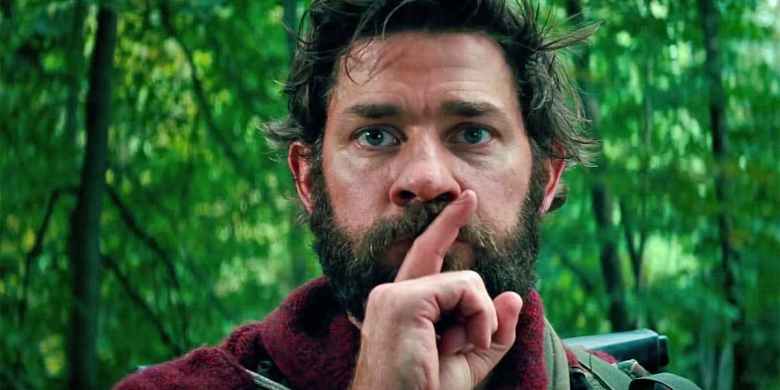
The BBFC decided that this film wouldn’t be able to receive the 12A rating, even with cuts. Which meant the movie earned the 15 rating, which as someone who has seen the movie, I agree that this was the right decision.
The fact the production company were hoping for a lower age rating, shows the different opinions of people who work within the movie industry. It brings forward the discussion of what one person may find offensive or difficult to watch, someone else may be perfectly fine with.
Bbfc.co.uk. (2011). Attack The Block | British Board of Film Classification. [online] Available at: https://bbfc.co.uk/case-studies/attack-block.
This is an interesting case study because when it was submitted for classification, there was not a specific age rating requested. This is not a normal thing, because most production companies want to try and appeal to a wide audience so they request the lowest age rating they believe they can get, which most of the time is the 12A rating.
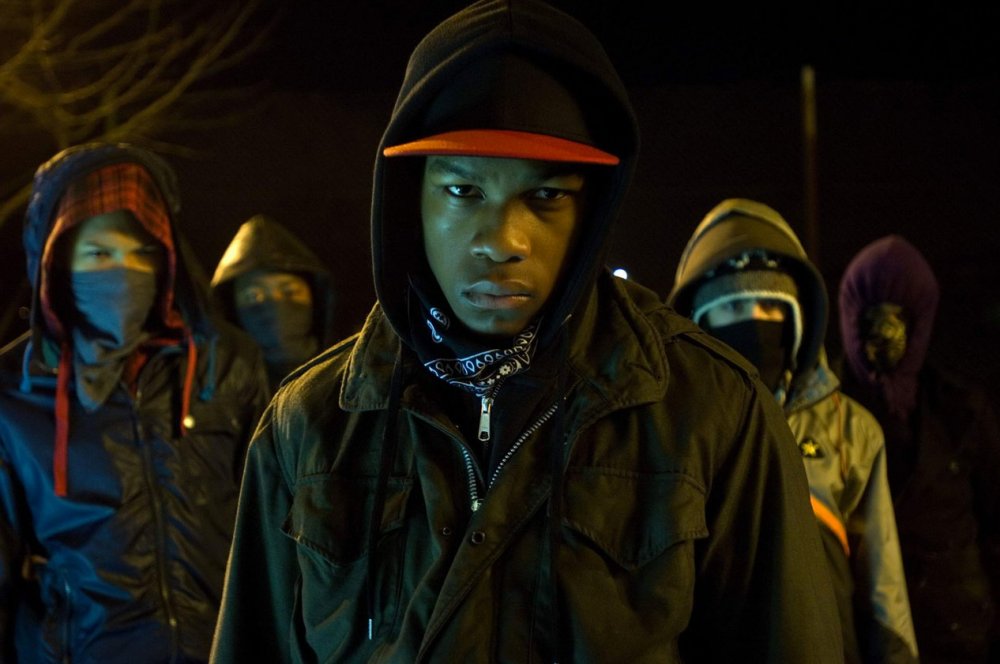
This source goes into detail about the reasons why it received the 15 age rating and stated even though it contains many aspects: profanity, sexual discussions, violence and drugs use, this didn’t go outside the 15 age rating that it finally decided upon
ARTICLE
Screen Daily. (2018). How film classification boards are responding to an industry in flux. [online] Available at: https://www.screendaily.com/features/how-film-classification-boards-are-responding-to-an-industry-in-flux-/5129903.article
This is a detailed article exploring the different age ratings that are given in different countries: the UK, Germany and Japan being 3 examples. This explains clearly how each country rates the movies and the reason they rate it the way they do.
It is an interesting look at how countries don’t agree on the ratings each gives to the same movie. The film Blue is the Warmest Colour (2013) got an 18 rating in the UK, yet in France, it got a 12 rating. This shows the vast differences between the opinions of each countries classification board.
As someone who is interested in movie ratings and would love to work for the bbfc, this was an interesting read and gave me information, as someone who has read up on this subject before, I didn’t even know.
Image References:
Jinga Films (2010). A Serbian Film. [image] Available at: https://bbfc.co.uk/sites/default/files/styles/hero/public/hero/A-Serbian-Film-01.jpg?itok=Cv6GP19c
Nordisk Film Distribution (2009). Antichrist Movie. [image] Available at: https://offscreen.com/images/made/images/articles/_resized/Antichrist_1000_420_90_c1.jpg
Paramount Pictures (2018). A Quiet Place. [image] Available at: https://www.indiewire.com/wp-content/uploads/2018/12/quiet-place.jpg?w=780
Optimum Releasing (2011). Attack The Block. [image] Available at: https://www.bfi.org.uk/sites/bfi.org.uk/files/styles/full/public/image/attack-the-block-2011-003-medium-shot-boys-in-hoods.jpg?itok=c89e-Kvj
 nathanedwards.movie.blog